



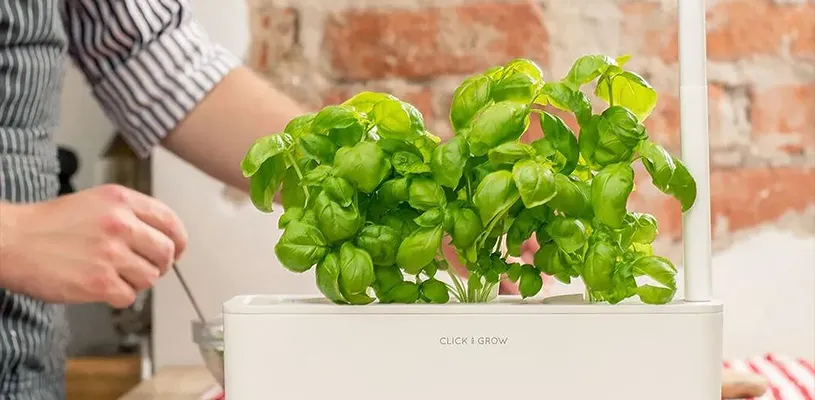
Fresh herbs make a big difference in cooking. A few basil leaves on pasta or a little fresh parsley over potatoes can turn an ordinary dinner into something much more enjoyable. The only problem is that herbs from the grocery store often last about as long as a ripe avocado — not very long at all.
That’s why more and more people are growing herbs indoors year-round instead. And it really doesn’t have to be difficult. With the right light, a little water, and a few easy-to-grow varieties, you can go a long way the first time around.
Why indoor growing is easier than many people think
Many people think growing requires a garden, advanced lamps, and lots of time. But herbs are fairly forgiving plants, especially indoors.
What makes indoor growing so convenient is that you have better control over the environment. No frost, no slugs, and far less weather chaos to worry about. It’s also nice to have something green in the kitchen during the dark winter months.
For beginners, it really comes down to four things:
- Enough light
- The right amount of water
- Stable temperature
- A little nutrients now and then
If herbs get those four things, they often grow better than you’d expect.
Light is more important than water
The most common reason herbs die indoors is actually not too little water, but too little light. Many herbs need at least 6 to 8 hours of light a day. In summer, a bright window is often enough, but in autumn and winter it gets harder in Sweden. That’s when basil starts to look tired pretty quickly.
Parsley and mint often do better in slightly weaker light, while basil and coriander are more demanding. If you really want to grow herbs indoors year-round, grow lights or a smart garden are often the simplest solution. Then you don’t have to think as much about season or placement.
Watering — moderation is almost always best
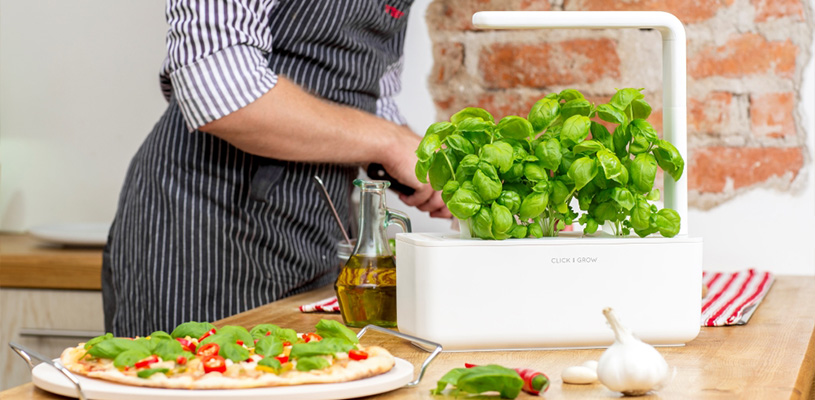
Herbs rarely like sitting in wet soil all the time. A fairly common beginner mistake is watering a little too often, just to be safe. The soil should ideally feel lightly moist, not soaked through. A good trick is to check a few centimeters down with your finger before watering again.
Basil drinks quite a lot, while rosemary and thyme prefer it drier. That’s why it’s smart not to plant all your herbs together right from the start. Once you get to know your plants, watering becomes much easier than it sounds.
Which herbs are easiest to start with?
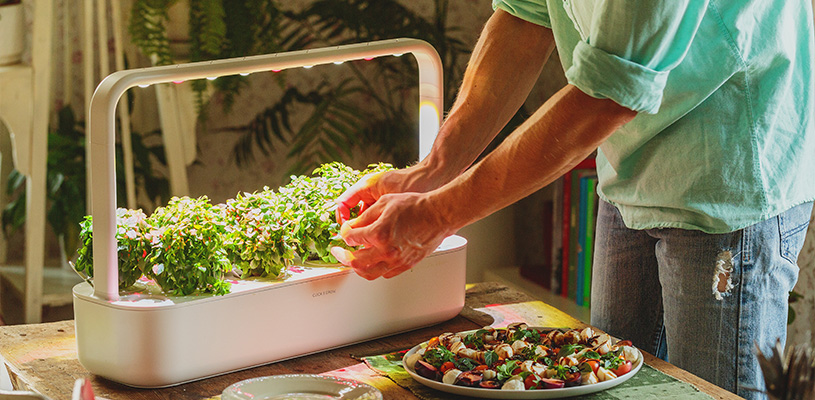
Some herbs are much more beginner-friendly than others. Starting with easy-to-grow varieties also makes it a lot more fun.
Here are some good herbs for beginners:
|
Herb |
Difficulty |
Harvest time |
Light requirement |
|
Basil |
Medium |
4-6 weeks |
High |
|
Parsley |
Easy |
5-7 weeks |
Medium |
|
Mint |
Very easy |
3-5 weeks |
Medium |
|
Dill |
Easy |
4-6 weeks |
High |
|
Chives |
Very easy |
3-5 weeks |
Medium |
|
Thyme |
Easy |
5-7 weeks |
High |
|
Rosemary |
Medium |
6-8 weeks |
High |
|
Coriander |
Slightly sensitive |
4-6 weeks |
High |
Mint and chives are almost impossible to fail with. Basil, on the other hand, is a little more dramatic and shows it right away if it’s unhappy.
Soil, hydroponics, or a smart garden?
Today, there are several different ways to grow herbs indoors, and they all have their advantages. Regular soil is the cheapest and feels the most traditional. You have plenty of freedom, but you also need to keep a better eye on water and nutrients.
Hydroponic growing means the plants grow without soil, often directly in water with nutrients. It gives fast growth and less mess, but it can feel a bit more technical at first.
Then there are smart garden solutions that automate much of the work. They often handle light and water more or less on their own, which makes them very popular with people who want fresh herbs without having to become full-time hobby growers. For many beginners, it’s actually a very good way to get started.
How to harvest herbs correctly
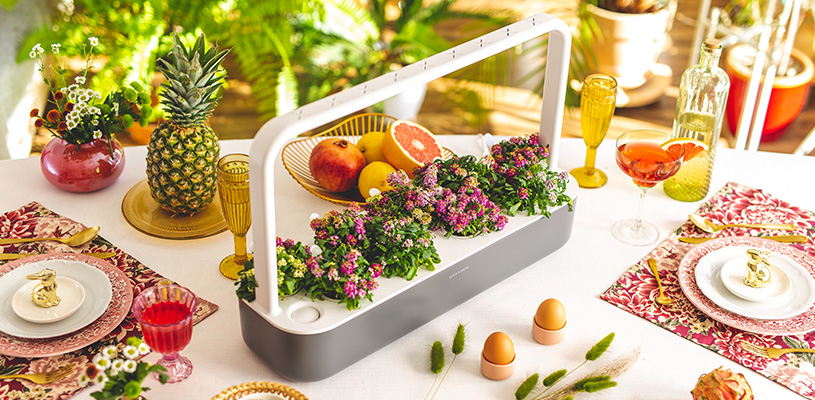
The nice thing about herbs is that you don’t have to wait for a big harvest. You can start picking a little at a time fairly early. The important thing is not to cut too far down right away. If you take a few leaves at a time, the plant keeps growing and often becomes denser over time. Basil, for example, does best when topped regularly. That makes it bushier instead of long and leggy.
Summary
Growing herbs indoors year-round is much easier today than it was a few years ago. With better grow lights, smart garden systems, and simpler guides, the barrier to entry is much lower.
Start simple. A few easy-to-grow herbs, a bright window, and the right amount of water can take you a long way. Once you get into the routine, it’s hard to go back to expensive little herb pots from the grocery store — and there’s something special about snipping fresh basil straight from the kitchen counter in the middle of January.
FAQ
Which herbs are easiest to grow indoors?
Mint, chives, and parsley are some of the easiest herbs for beginners.
Do herbs need grow lights?
In winter, they’re often a big advantage because daylight in Sweden is fairly limited.
How often should you water indoor herbs?
It depends on the variety and the environment, but the soil should usually be lightly moist — not wet.
How long does it take to grow basil?
Usually about 4 to 6 weeks from sowing to first harvest.
Is a smart garden worth it?
For many people, yes, especially if they want to grow herbs year-round without having to monitor everything manually.