



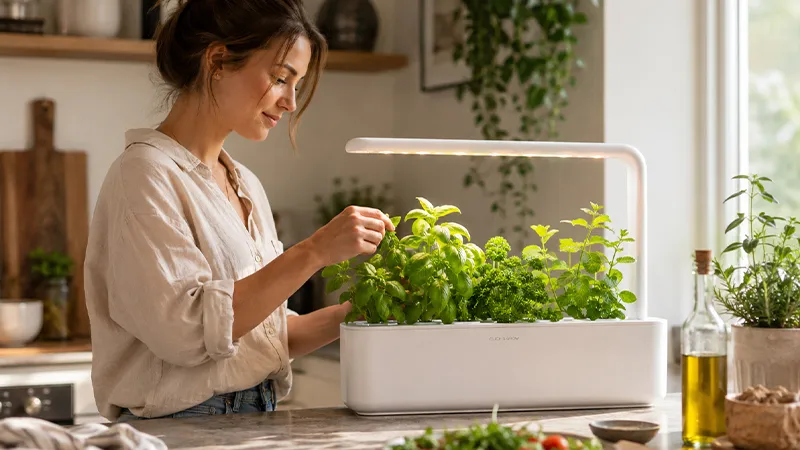
You’ve probably heard the word hydroponics before. Maybe in connection with indoor growing, smart growing systems, or plants that grow without soil. But what does it actually mean, and why has this growing method become so popular in recent years?
Hydroponics, also called hydroculture, makes it possible to grow herbs, lettuce, flowers, and many other plants without a traditional pot of soil. Instead, plants receive water, oxygen, and nutrients in a more controlled way, which often leads to faster growth, less maintenance, and far less mess. In this guide, we’ll look at how hydroponics works, what different types there are, and why more and more people are choosing to grow this way at home.
What is hydroponics?
The word hydroponics comes from the Greek hydro (water) and ponos (work). Put simply, it means that water does the job that soil normally does.
Many people think soil is necessary for plants to survive, but that’s actually not true. Soil mainly serves as support for the roots and as a reservoir for water and nutrients. If a plant gets the right amount of water, oxygen, and nutrients in other ways, it can do perfectly well without soil.
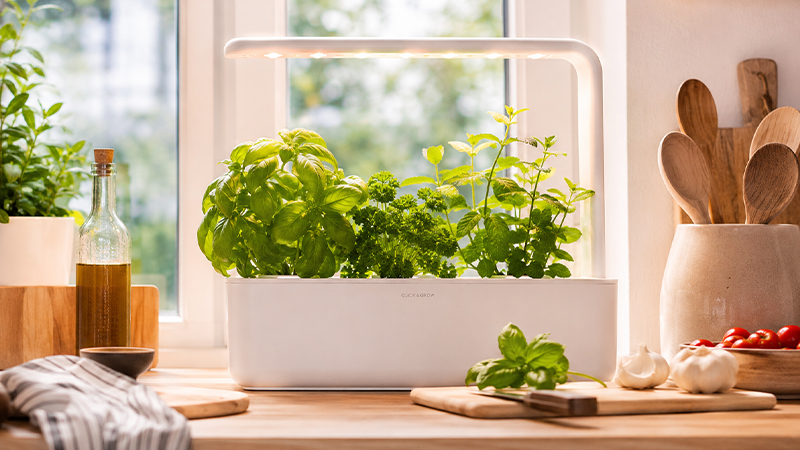
That’s exactly the principle hydroponics is based on. Because nutrients are delivered directly to the roots, the plant doesn’t have to spend as much energy searching for them. Instead, more energy can go into growing, developing leaves, and producing flowers or fruit.
That’s also why many people find hydroponic growing delivers faster results than traditional growing in soil.
Are hydroponics and hydroculture the same thing?
Yes. In Sweden, both hydroponics and hydroculture are used to describe the same growing principle. Hydroponics is the international term and is most often used when talking about the technology behind growing systems. Hydroculture is the Swedish term and often appears in gardening contexts.
In practice, it doesn’t matter which word you use. Both describe growing without soil, where the plant’s roots receive water, oxygen, and nutrients in ways other than in a traditional flowerpot.
How does soil-free growing work?
What makes hydroponics so smart is that the plant gets exactly what it needs, when it needs it.
In a regular flowerpot, the roots have to search for water and nutrients in the soil. In a hydroponic system, the nutrients are already available, making the process much more efficient.
For a plant to thrive, it really only needs four things:
- Water
- Oxygen
- Nutrients
- Light
When those four parts work together, it matters less whether the roots are in soil or not.
There are also several different ways to deliver water and nutrients to the roots, which means hydroponic systems can look very different even though they’re based on the same basic principle.
Passive and active hydroponics - what’s the difference?
When you start reading about hydroponics, you often come across the terms passive and active hydroponics. The difference is mainly about how water and nutrients are transported to the plant’s roots.
Passive hydroponics
In a passive system, no pumps or circulating water are used. Instead, the plant gets water and nutrients through a growing medium that holds the right amount of moisture while still allowing oxygen to reach the roots.
Click & Grow’s Smart Garden series uses this principle together with the company’s Smart Soil technology. Smart Soil does not function like ordinary soil, but is designed to give the plant the right balance of water, oxygen, and nutrients throughout the growing period.
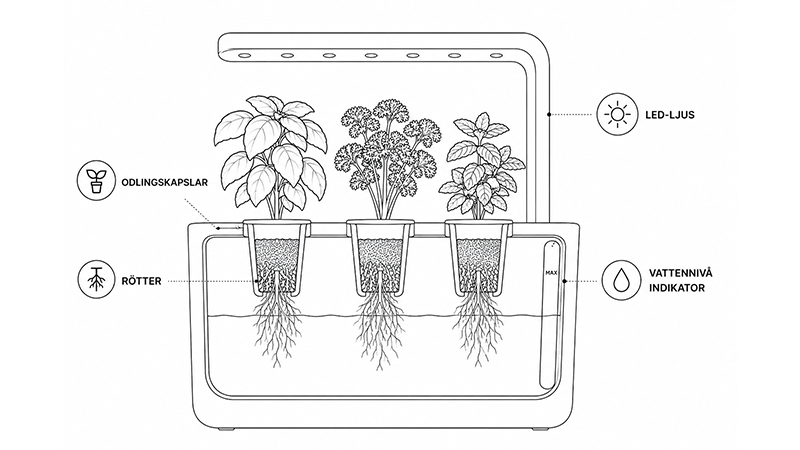
That makes the system very easy to care for. You top up the water when the indicator shows it’s needed and let the growing capsules do the rest.
For many beginners, this is the easiest way to get started with hydroponic growing at home.
Active hydroponics
Active hydroponics, on the other hand, is based on water and nutrient solution circulating around the roots with the help of pumps or other technical solutions.
This gives the user greater control over the growing process and makes it possible to grow larger plants or experiment with different nutrient levels.
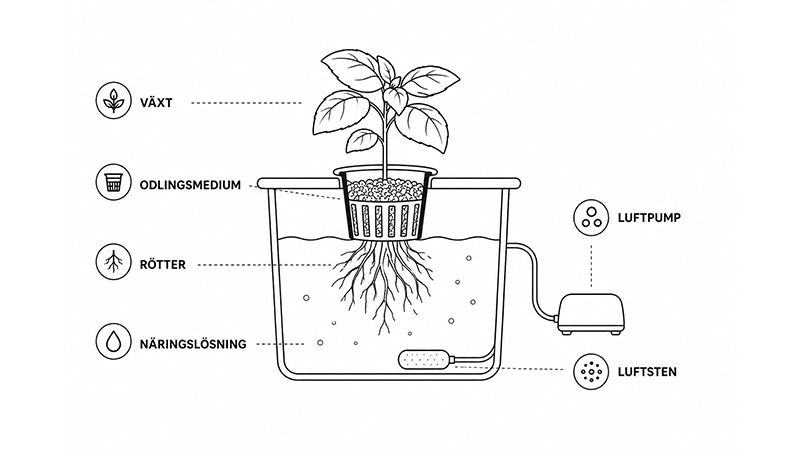
One example is Click & Grow’s HydroVase, where plants receive water and nutrients through an active hydroponic system while the elegant design makes the growing setup feel like a natural part of the interior.
Both methods count as hydroponics. The difference mainly has to do with how automated and advanced the growing setup is.
Hydroponics compared with growing in soil
|
Hydroponics |
Traditional soil growing |
|---|---|
|
No soil needed |
Soil is necessary |
|
Efficient water use |
Higher water consumption |
|
Lower risk of soil-borne pests |
Greater risk of pests in the soil |
|
Often faster growth |
Growth rates vary more |
|
Cleaner indoor growing |
Soil can spill and create dust |
|
Requires the right nutrient balance |
Nutrients are partly present naturally in the soil |
That doesn’t mean hydroponics is always better than soil. Both methods have their strengths and suit different types of growing.
But for anyone who wants to grow fresh herbs year-round in the kitchen, or wants an easy-to-care-for indoor garden, hydroponics is often a much more convenient option.
Five major benefits of hydroponics
There’s a reason hydroponics has become so popular in recent years. The technology makes it possible to grow in places where traditional soil growing is difficult or completely impossible.
Some of the biggest benefits are:
- Plants often grow faster because nutrients are readily available.
- Much less water is used compared with traditional growing.
- No soil means less cleaning and less mess indoors.
- Fewer soil-borne pests and diseases.
- You can grow all year round, whatever the weather outside the window.
For many people, the biggest win isn’t actually that plants grow faster, but that growing becomes so easy that it actually gets done.
Want to try hydroponics yourself?
If you’re curious about hydroponics but don’t want to mix nutrient solutions or set up an advanced system, a ready-made growing system is often the best place to start.
Click & Grow Smart Garden 9 uses passive hydroponics with Smart Soil and makes it possible to grow fresh herbs, lettuce, and many other plants year-round with minimal care. For many people, it’s the easiest way to discover just how convenient soil-free growing can be.
Hydroponics for beginners - how to get started
One of the most common misconceptions is that hydroponics is complicated or requires a lot of technical knowledge. That may be true if you build an advanced system from scratch, but today’s ready-made solutions are much simpler than that.
For most people, it really just comes down to choosing a system that suits the home and the type of plants you want to grow. With a complete system, you top up the water when needed and let the plant handle the rest. You avoid soil on the kitchen counter, worrying about the right soil mix, and the risk of overwatering just as easily as in a regular pot.
That makes hydroponics especially appealing if you’ve never grown anything before. Many people find it feels much easier to succeed when the system helps create the right conditions from the start.
Which plants work best?
Almost any plant can be grown hydroponically, but some are much easier to succeed with than others. For beginners, herbs are an excellent choice because they grow quickly and are used almost daily in cooking.
Basil, parsley, dill, mint, and coriander are classic examples. Lettuce, spinach, and arugula also work very well, and many people choose to grow small tomatoes, chili peppers, or strawberries once they’ve become a bit more comfortable with the technology.
For anyone who wants to use hydroponics as part of the decor, there are also flowering plants and green houseplants that thrive beautifully in hydroponic systems. Here, modern products such as Click & Grow HydroVase have made it possible to combine growing with design in a way that was uncommon before.
Common mistakes to avoid
Even though hydroponics is easy to get started with, there are a few common mistakes worth knowing about.
The first is thinking that more water is always better. Plant roots also need oxygen, so the balance between water and air is important. A good hydroponic system is designed to give the roots both.
Another common mistake is using the wrong nutrients or adding extra fertiliser in a system where the nutrients are already tailored. If you use ready-made growing capsules or a complete system, it’s usually best to follow the manufacturer’s recommendations rather than experiment.
Finally, light is just as important as water. Even the most advanced hydroponic solution needs enough light for plants to develop properly. That’s why many modern systems have built-in LED lighting that mimics daylight.
Is hydroponics better than soil?
The simple answer is that it depends on what you want to grow and how you want to grow it. If you have a large garden and enjoy planting, digging, and working with soil, traditional growing will always have its advantages. Soil is also a living ecosystem that many people enjoy working with.
But for anyone living in an apartment, wanting to grow year-round, or simply wanting to spend less time on care, hydroponics offers several clear benefits. It takes up less space, uses water more efficiently, and makes it possible to grow fresh herbs and lettuce in the middle of winter without needing a greenhouse.
That’s why many people today don’t see hydroponics as a replacement for growing in soil, but as a complement. You can grow tomatoes outside in summer and still have fresh basil and lettuce in the kitchen all year round.
Two different ways to grow with Click & Grow
What makes Click & Grow a little unique is that the company offers solutions for both types of hydroponics. If you want the simplest possible growing setup, the Smart Garden series is an excellent choice. Smart Soil technology gives plants the right balance of water, oxygen, and nutrients, which means even someone who has never grown anything before can get started in just a few minutes.
If, instead, you want to create a more decorative feature in your home while also experiencing active hydroponics, HydroVase is an exciting option. Here, modern design is combined with a hydroponic system that makes the plants a natural part of the interior.
Whichever option you choose, both are built on the same basic idea: making it easier to succeed with growing at home.
Summary
Hydroponics may sound advanced the first time you hear the word, but the principle itself is surprisingly simple. Plants don’t really need soil - they need water, oxygen, nutrients, and light. When those four parts are in place, they can develop at least as well, and often better, than in a traditional flowerpot.
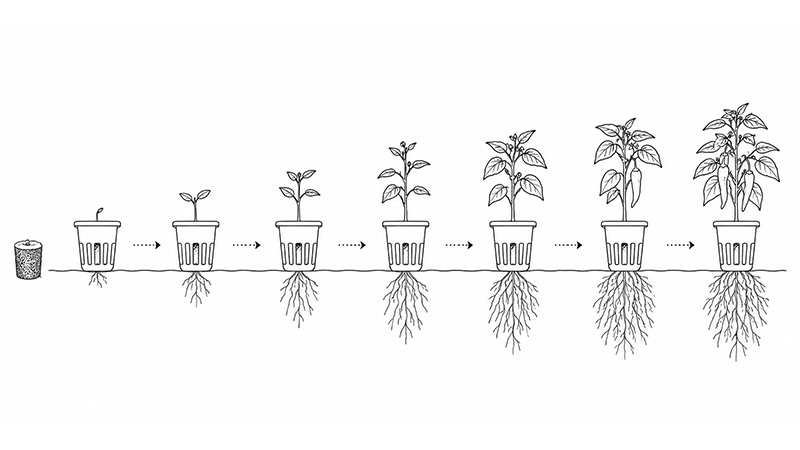
That’s also why hydroponics has become such a popular way to grow at home. The method works just as well for beginners as it does for experienced growers, and makes it possible to enjoy fresh herbs, lettuce, and flowering plants all year round. For many people, it also becomes the start of a completely new interest in growing.
FAQ
Are hydroponics and hydroculture the same thing?
Yes. The words are often used as synonyms and describe soil-free growing where the plant instead gets water, oxygen, and nutrients directly.
Is hydroponics difficult for beginners?
No. With a ready-made growing system, hydroponics is often easier than traditional pot growing because the system helps provide the plant with the right conditions.
Do you need to use nutrient solution?
Yes. Since there is no soil, the plant needs to get its nutrients in another way. In many ready-made systems, the nutrients are already built into the growing capsules or tailored to the system.
Which plants work best?
Herbs such as basil, parsley, dill, and mint are perfect for beginners. Lettuce, spinach, small tomatoes, and chili peppers also work very well.
Can hydroponics be used all year round?
Yes. That’s one of the biggest advantages. With the right lighting, you can grow fresh herbs and vegetables even during the dark part of the year.
Is hydroponics more environmentally friendly?
Because water is used very efficiently and growing often happens close to where the food is consumed, hydroponics can be a more resource-efficient option in many situations.
Which system is best for beginners?
For most people, a complete system with automatic watering and built-in lighting is the easiest way into hydroponic growing.