



Put the plant in the window, and it should get enough light, right? That sounds logical, but the gap between what we humans consider a bright room and what a plant experiences as bright can be surprisingly large.
This is especially noticeable during the Swedish autumn and winter. The days get shorter, the sun sits lower, and a windowsill that worked perfectly in summer can suddenly be a fairly dark spot. To understand why, we need to look more closely at what plants actually use light for and how much they need.
A bright room can be dark for a plant
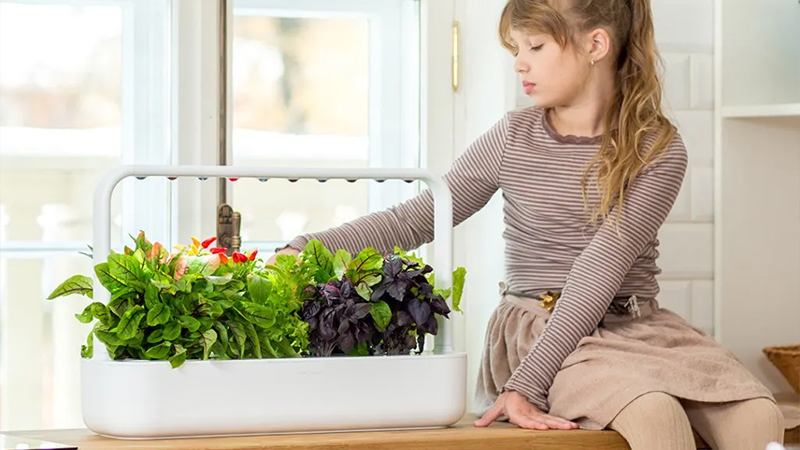
Our eyes are very good at adapting to different lighting conditions. A room can therefore feel quite bright even when the amount of light reaching the plant is fairly low. Click & Grow, for example, says that even outdoor shade can be significantly brighter than a sunny indoor window.
Light levels can be measured in lux. Click & Grow says that roughly 5 000 to 8 000 lux for several hours a day is a level that supports strong growth in many plants, while 1 000 lux may be enough to keep a plant healthy. Edible and fruiting plants may need even more.
That is why winter is extra challenging
In winter, the sun is lower in the sky while the number of daylight hours decreases. The result is not only that plants get light for less time, but also that the light can be less intense. That is why many common houseplants naturally slow their growth during the winter months.
A first step is to move light-hungry plants closer to a bright window. It is a good idea to clean both the window and the leaves, and to rotate the pots from time to time so different parts of the plant get light. During really dark months, however, grow lights may be necessary if you want to keep growth going strong.
Herbs need more than cozy lighting
This becomes especially clear if you are trying to grow something you actually want to eat. Basil, lettuce and other fast-growing crops need energy to keep producing new leaves. The lamp over the kitchen table is primarily designed for us to see dinner, not for photosynthesis.
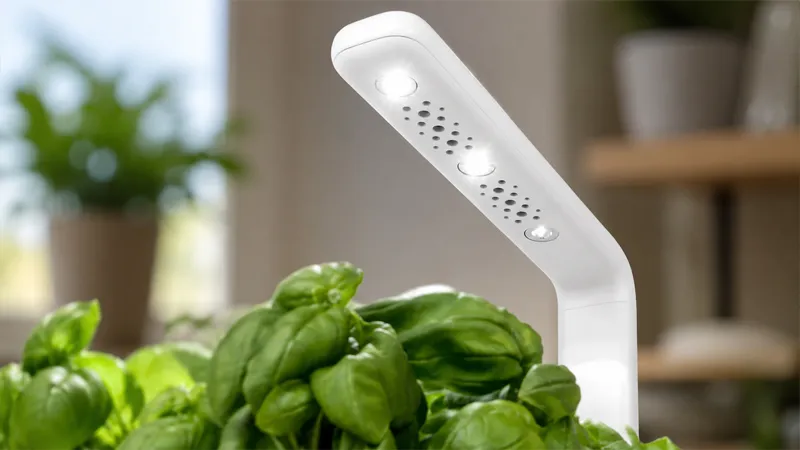
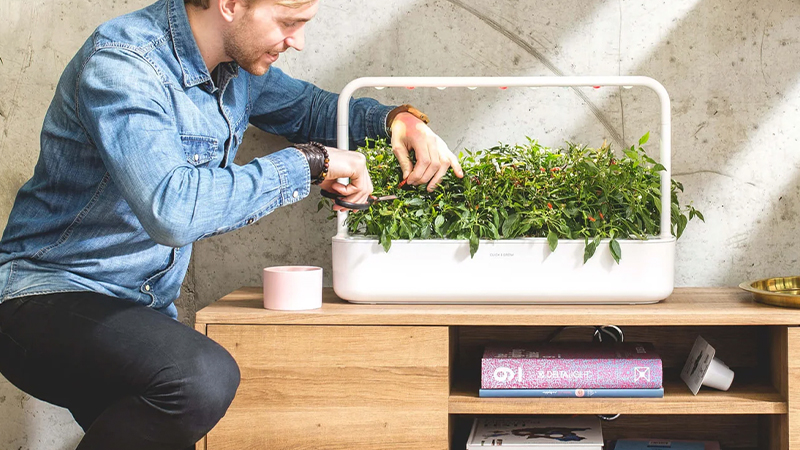
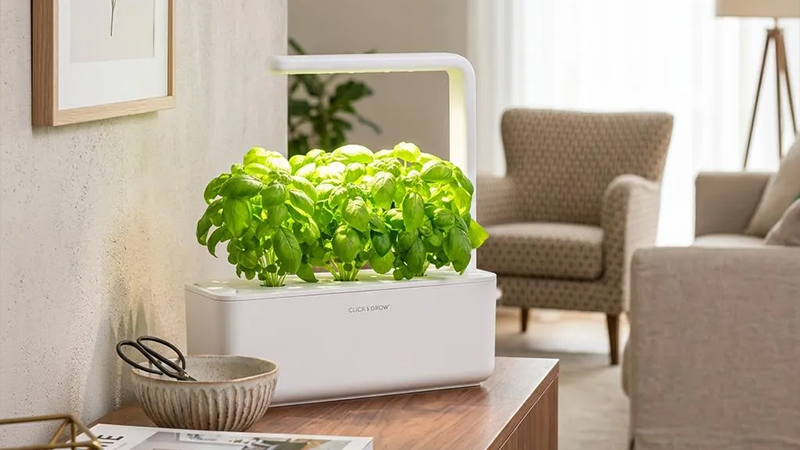
That is one reason grow lights use light that is adapted for plants. Click & Grow uses LED lighting in its Smart Garden systems, and a built-in timer makes sure the plants get a consistent light period every day, whether it happens to be July or December outside the window.
You can actually measure the light
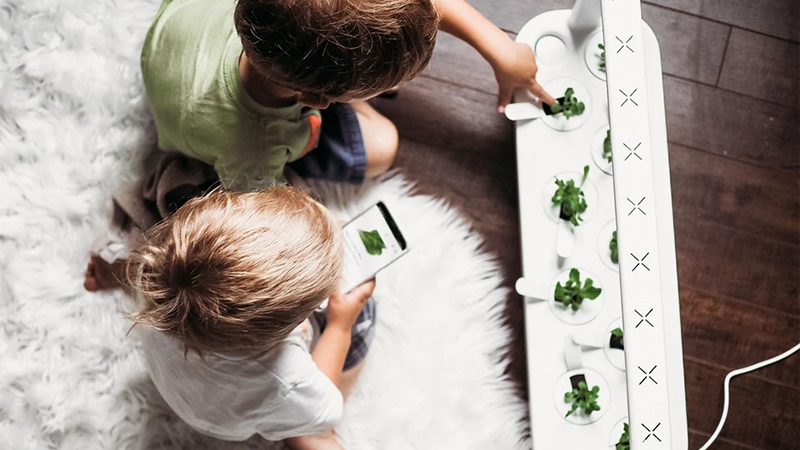
If you want to experiment at home, you do not necessarily need to buy advanced measuring equipment. Click & Grow recommends using a lux meter app on your phone to get an idea of how much light different places in the home receive.
Try it by the window, then move your phone a few metres into the room. The difference can be much greater than your eyes make it seem. It is also an easy way to understand why a plant leans in a certain direction or grows much better in one room than in another.
The right light makes growing much easier
Light is, of course, only part of the equation. Plants also need water, nutrients and the right temperature. But without enough light, it does not matter all that much how good you are with the watering can.

If you want to grow herbs and vegetables year-round, controlled lighting becomes especially interesting. A smart growing system does not only solve the problem of the dark winter months, but also makes light conditions roughly the same and predictable every day. And plants appreciate predictability far more than Swedish winter weather.
FAQ
How much light does a plant need?
It varies by species. Click & Grow says that around 1 000 lux may be enough to maintain good health in many plants, while strong growth may require roughly 5 000 to 8 000 lux for several hours.
Is a window enough for plants in winter?
For some houseplants, yes, especially in a bright window. Fast-growing herbs and other edible plants may, however, need supplementary grow lights during the darkest months.
Can regular room lighting help plants?
Regular lamps provide light, but they are normally designed for people and room lighting rather than plant growing. For active growing, dedicated grow lights are a more predictable option.
How do I know if the plant is getting too little light?
Weak or slow growth and plants stretching toward the light source can be signs. It is a good idea to compare different spots with a lux meter or a suitable phone app.
Why does Click & Grow have built-in lighting?
Smart Garden uses LED grow lights and a timer to give the plants a controlled amount of light every day. That makes growing less dependent on the season and on where the system is placed in relation to a window.